
OSCELab

Free demo: 10 sample questions available. Subscribe to unlock the full question bank.

View plans
Presentation Any presentation
Status All

1 MCQ
Frank Dodson, a 56-year-old male Indigenous Australian cattle station manager, presents to your remote rural GP clinic with sudden-onset crushing central chest pain for the past 30 minutes, radiating to his left arm. He is diaphoretic and nauseated. His wife drove him 40 minutes to your clinic.

The nearest PCI-capable hospital is 3 hours by road ambulance or 90 minutes by retrieval helicopter.

Past medical history:
  • Hypertension — perindopril 10 mg daily (often non-adherent)
  • Type 2 diabetes — metformin 1 g BD, gliclazide MR 60 mg daily; HbA1c 8.9%
  • Dyslipidaemia — atorvastatin 40 mg nocte; LDL 2.8 mmol/L
  • Gout — allopurinol 300 mg daily
  • Ex-smoker (45 pack-years, quit 2 years ago)
  • Strong family history of ischaemic heart disease
  • No known allergies

Examination:
  • HR: 98 bpm
  • BP: 148/92 mmHg
  • RR: 22/min
  • SpO₂: 96% on room air
  • Distressed, pale, and diaphoretic
  • Dual heart sounds, no murmurs; chest clear; no peripheral oedema

His 12-lead ECG is shown below:
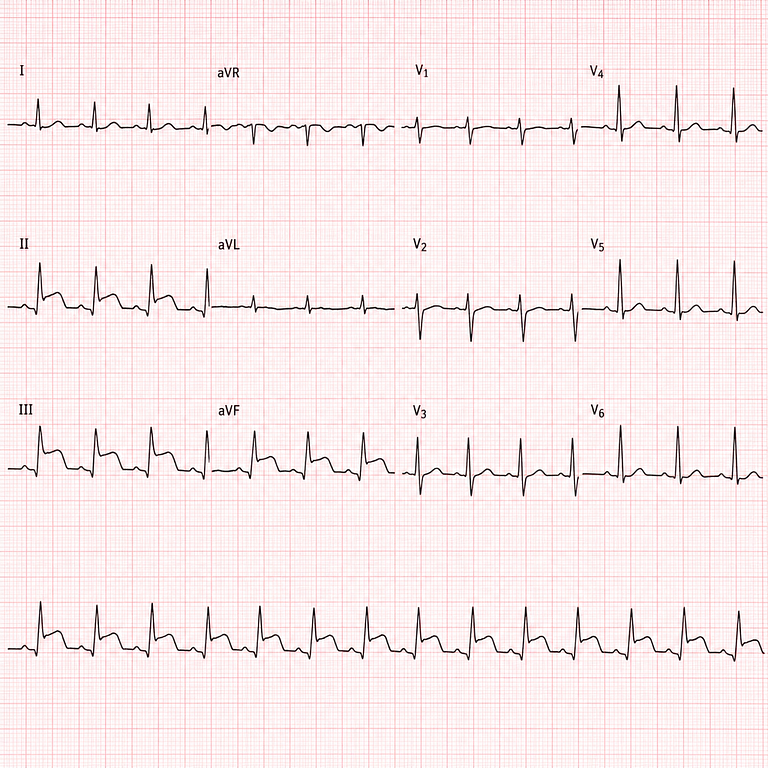
AI-generated educational illustration

Which of the following is the most appropriate immediate management?

Select the best answer
2 MCQ
Noah Singh is a 6-year-old boy brought to your GP clinic by his mother for ongoing management of his eczema. The rash has persisted for 3 months despite regular use of emollients. It is intensely itchy, disrupts his sleep, and causes daytime fatigue and difficulty concentrating at school. There is no weeping, crusting, or signs of secondary infection.

Past medical history:
  • Atopic dermatitis — since age 9 months
  • Mild persistent asthma — fluticasone 125 mcg BD via MDI with spacer; salbutamol 100 mcg 2 puffs PRN
  • Allergic rhinitis — cetirizine 5 mg daily
  • Peanut allergy — prescribed adrenaline autoinjector (EpiPen Jr 150 mcg); no recent reactions
  • Vaccinations up to date (National Immunisation Program). No known drug allergies.

Examination:
  • Temperature: 36.6°C
  • Heart rate: 88 bpm
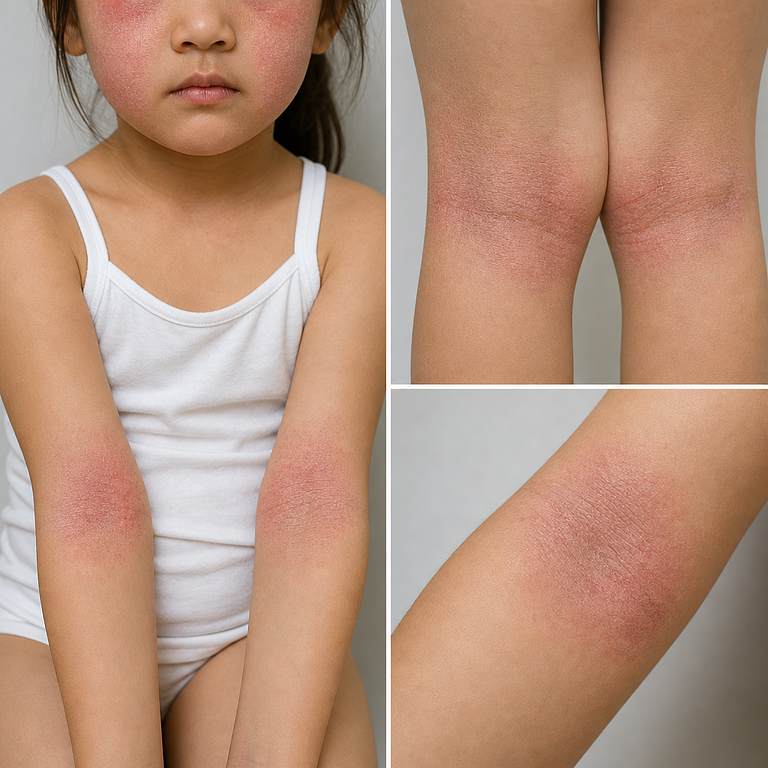
  • Skin: appearance shown below:
    AI-generated educational illustration
  • No regional lymphadenopathy; capillary refill time 2 seconds

SCORAD score: 28 (moderate atopic dermatitis)

Which of the following is the most appropriate next step in management?

Select the best answer

3 MCQ
Mohammed Aziz, a 55-year-old male taxi driver, presents for review of recent blood and urine results. He is asymptomatic but reports occasional bilateral ankle swelling at the end of long shifts. He was diagnosed with type 2 diabetes 12 years ago and has had progressively rising creatinine over the past 3 years.
Past medical history:
  • Type 2 diabetes — metformin 1 g BD, gliclazide MR 60 mg daily, empagliflozin 10 mg daily; HbA1c 7.4%
  • Hypertension — amlodipine 10 mg daily (previously well controlled)
  • Dyslipidaemia — atorvastatin 40 mg nocte
  • Gout — allopurinol 100 mg daily
  • Bilateral background diabetic retinopathy (last ophthalmology review 6 months ago)
He is a non-smoker and does not drink alcohol.
Examination:
  • BP: 152/94 mmHg (average of 3 readings)
  • HR: 76 bpm
  • BMI: 29.8 kg/m²
  • Mild bilateral pitting ankle oedema
  • Fundoscopy: background diabetic retinopathy bilaterally
  • Monofilament sensation intact bilaterally
  • No abdominal bruit
Investigations:
  • Creatinine: 142 µmol/L ↑ (reference 60–110)
  • eGFR: 44 mL/min/1.73 m² ↓ (previously 58 mL/min/1.73 m² one year ago)
  • Urine albumin-to-creatinine ratio (UACR): 45 mg/mmol ↑ (reference <3.5 mg/mmol)
  • HbA1c: 7.4%
  • Potassium: 4.8 mmol/L (3.5–5.2)
  • Fasting LDL: 2.1 mmol/L
  • FBC: Normal
Which of the following is the most appropriate next step in management?

Select the best answer

4 MCQ
Margaret Brown, an 82-year-old retired librarian, is brought to your general practice by her daughter. Over the past two days, Margaret has become acutely confused and agitated, intermittently failing to recognise family members. She was drowsy the previous afternoon but became restless and aggressive overnight, calling out to unseen visitors. Prior to this episode she lived independently with no known cognitive impairment.
Past medical history:
  • Hypertension
  • Atrial fibrillation
  • Bilateral knee osteoarthritis
  • Type 2 diabetes
  • Osteoporosis
Current medications:
  • Amlodipine 10 mg daily
  • Perindopril 5 mg daily
  • Apixaban 2.5 mg BD
  • Metoprolol 47.5 mg daily
  • Paracetamol 1 g QID
  • Oxycodone 5 mg BD (commenced three days ago by an after-hours GP for an acute pain flare)
  • Metformin 500 mg BD
  • Alendronate 70 mg weekly
  • Calcium/cholecalciferol 600 mg/500 IU daily
Examination:
  • Temperature: 37.8 °C
  • Heart rate: 88 bpm (irregular)
  • Blood pressure: 136/82 mmHg
  • Respiratory rate: 18 breaths/minute
  • Oxygen saturation: 96% on room air
Margaret is inattentive, unable to follow a three-step command, and cannot recite the months of the year in reverse. She is disoriented to time and place. Glasgow Coma Scale score is 13 (E3 V4 M6). No focal neurological signs are present. Her abdomen is soft with mild suprapubic fullness.
Point-of-care investigations:
  • Urinalysis: leucocytes 2+, nitrites positive
  • Blood glucose: 8.2 mmol/L
Which of the following is the most appropriate initial management?

Select the best answer

5 MCQ
George Yunupingu, a 72-year-old Indigenous Australian retired park ranger, presents to your regional GP clinic brought by his son after vomiting bright red blood twice this morning.

He reports two weeks of worsening epigastric pain, dark tarry stools for the past three days, and increasing lightheadedness on standing. He feels weak and nauseated.

Past medical history:
  • Hypertension: irbesartan 150 mg daily, amlodipine 5 mg daily
  • Type 2 diabetes: metformin 1 g twice daily, gliclazide MR 30 mg daily, HbA1c 7.8%
  • Osteoarthritis (bilateral knees and hips): ibuprofen 400 mg three times daily for the past 6 weeks (no gastroprotection)
  • Atrial fibrillation: apixaban 5 mg twice daily
  • Alcohol use: 4–6 standard drinks daily
  • Smoking: ex-smoker, 20 pack-years
Examination:
  • Temperature: 36.9°C
  • Heart rate: 112 bpm
  • Blood pressure: 92/60 mmHg lying, 78/52 mmHg standing (orthostatic hypotension)
  • General: pale and diaphoretic
  • Abdomen: soft, epigastric tenderness; no peritonism
  • Digital rectal examination: melaena
Point-of-care results:
  • Haemoglobin: 78 g/L ↓ (reference 130–175 g/L)
  • Blood glucose: 11.2 mmol/L
The nearest hospital is 45 minutes away by road ambulance.

Which of the following is the most appropriate immediate management?

Select the best answer
6 MCQ
Susan Gupta, a 68-year-old retired Indian-Australian accountant, presents for follow-up after a distal radius fracture two weeks ago sustained from a fall from standing height. She was managed with a cast in the emergency department. She has a history of a vertebral compression fracture at T12, found incidentally on chest X-ray three years ago — she was told she had 'thin bones' but was never started on treatment.

Past medical history:
  • Rheumatoid arthritis — methotrexate 15 mg weekly, folic acid 5 mg weekly, prednisolone 5 mg daily for 4 years
  • Hypertension — ramipril 5 mg daily
  • Hypothyroidism — levothyroxine 100 mcg daily
  • Chronic kidney disease stage 3a (eGFR 48 mL/min)
  • Non-smoker; does not drink alcohol
  • BMI 20.8 kg/m²; menopause at age 49

DEXA scan results (arranged after the first fracture; results not previously actioned):
  • Lumbar spine T-score: −2.8
  • Total hip T-score: −2.1
  • Femoral neck T-score: −2.6

Examination: BP 128/74 mmHg, height 158 cm (was 162 cm at age 30 — 4 cm height loss). Thoracic kyphosis noted. No focal tenderness on spinal palpation.

Investigations:
  • Calcium: 2.32 mmol/L (2.10–2.60)
  • Phosphate: 1.1 mmol/L
  • ALP: 95 U/L (30–110)
  • Vitamin D: 42 nmol/L ↓ (adequate >50 nmol/L)
  • eGFR: 48 mL/min

Which of the following is the most appropriate next step in management?

Select the best answer

7 MCQ
Fatima Al-Rashid, a 30-year-old accountant, presents to your general practice with a two-day history of heavy vaginal bleeding and lower abdominal cramping. She had a confirmed intrauterine pregnancy at nine weeks gestation; a spontaneous miscarriage was diagnosed at her 12-week ultrasound ten days ago. She initially opted for expectant management, but bleeding has increased significantly since yesterday, with clots. She reports soaking through a pad every one to two hours and feeling lightheaded on standing.

Past medical history:
  • Hypothyroidism — thyroxine 75 microgram daily
  • Previous caesarean section (two years ago)
  • Asthma — fluticasone/salmeterol 250/25 microgram BD, salbutamol PRN
  • Penicillin allergy (rash)
  • No anticoagulants
  • Rh-negative — received anti-D immunoglobulin at initial diagnosis
Examination:
  • General: pale, diaphoretic
  • HR: 108 bpm
  • BP: 95/60 mmHg (baseline 110/70 mmHg)
  • Temperature: 36.8°C
  • Abdomen: soft, mild suprapubic tenderness, no peritonism
  • Speculum: dilated cervical os with visible products of conception
Investigations:
  • Bedside haemoglobin: 88 g/L ↓ (booking Hb 125 g/L)
  • Urine pregnancy test: positive
Which of the following is the most appropriate next step in management?

Select the best answer

8 MCQ
Douglas Mabo, a 72-year-old male retired cane farmer from Townsville, presents to your rural GP clinic feeling generally unwell. He reports 3 days of fatigue, muscle weakness, and heavy legs, with mild nausea. He has not changed his medications and denies diarrhoea, vomiting, or reduced oral intake.
Past medical history:
  • Heart failure with reduced ejection fraction (EF 35%): carvedilol 25 mg BD, ramipril 10 mg daily, spironolactone 25 mg daily, frusemide 40 mg daily
  • Type 2 diabetes: metformin 500 mg BD (dose-reduced for renal function)
  • Chronic kidney disease stage 3b: eGFR 38 mL/min/1.73m², baseline creatinine 155 μmol/L
  • Gout: allopurinol 100 mg daily
  • Osteoarthritis: paracetamol 1 g QID PRN
Examination:
  • General: alert and oriented
  • BP: 105/68 mmHg
  • HR: 52 bpm, regular
  • Temperature: 36.5°C
  • SpO₂: 97% on room air
  • JVP: elevated 4 cm
  • Ankles: mild bilateral oedema
  • Chest: clear
  • Neurology: no focal deficit
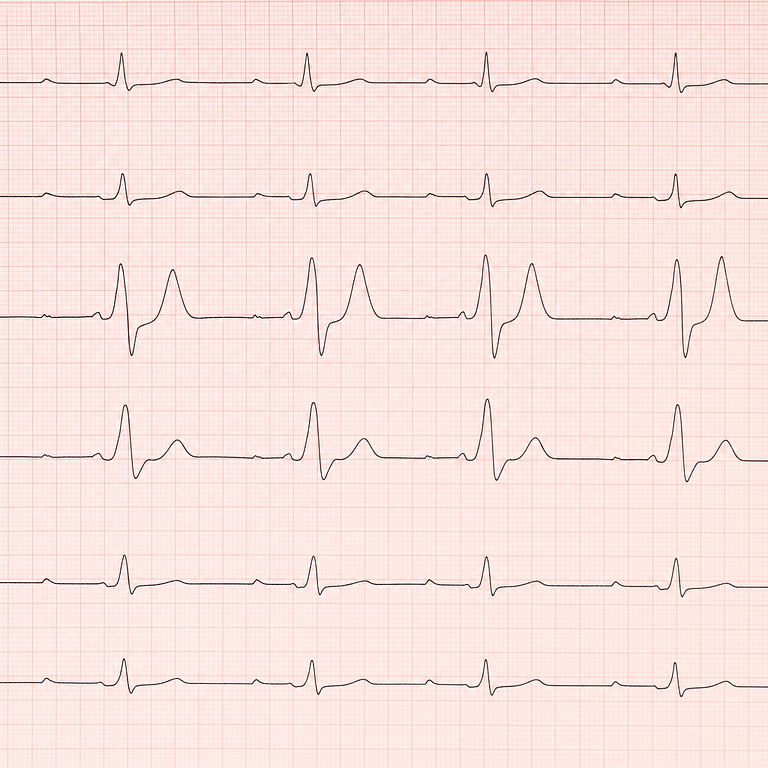
ECG is shown below:
AI-generated educational illustration
Point-of-care investigations:
  • Potassium: 7.1 mmol/L ↑
  • Creatinine: 195 μmol/L ↑ (baseline 155 μmol/L)
  • Glucose: 8.2 mmol/L
Which of the following is the most appropriate immediate action?

Select the best answer

9 MCQ
Raymond Patel, a 72-year-old male retired Indian-Australian pharmacist, presents to your GP clinic with gradually worsening vision in both eyes over the past 18 months. He reports difficulty reading, increased glare when driving at night, and progressive yellowing of his vision. He has had two new spectacle prescriptions in the past year with diminishing benefit. He is concerned about his ability to continue driving safely.
Past medical history:
  • Type 2 diabetes: metformin 1 g BD, empagliflozin 10 mg daily, HbA1c 7.0%
  • Hypertension: amlodipine 5 mg daily, perindopril 5 mg daily
  • Dyslipidaemia: atorvastatin 40 mg nocte
  • Benign prostatic hyperplasia: tamsulosin 400 mcg daily — relevant for surgery due to intraoperative floppy iris syndrome (IFIS) risk
  • Chronic kidney disease: stage 3a (eGFR 52 mL/min)
  • Non-smoker
Examination:
  • BP: 130/76 mmHg
  • HR: 70 bpm
  • Visual acuity (with current spectacles): right eye 6/18, left eye 6/24
  • Pupils equal and reactive; no relative afferent pupillary defect
  • Anterior segment: bilateral nuclear sclerotic cataracts with lens opacification
  • Fundoscopy (through cataract): mild background diabetic retinopathy bilaterally, no macular oedema, cup-to-disc ratio 0.4 bilaterally
  • Intraocular pressure: right 16 mmHg, left 17 mmHg (normal 10–21 mmHg)
Which of the following is the most appropriate next step in management?

Select the best answer

10 MCQ
Michael Singh, a 48-year-old male long-haul truck driver, presents to your GP clinic for review of persistent hypertension despite lifestyle modifications and two antihypertensive agents. His wife, who accompanies him, reports he snores extremely loudly every night, has witnessed episodes where he stops breathing for 10–15 seconds, and that he often wakes gasping.

He reports excessive daytime sleepiness (Epworth Sleepiness Scale score 16; normal <10), morning headaches, and difficulty concentrating during long drives.

Past medical history:
  • Hypertension: perindopril 10 mg daily + amlodipine 10 mg daily — BP still 155/95 mmHg despite good adherence
  • Type 2 diabetes: metformin 1 g BD, HbA1c 7.6%
  • Gastro-oesophageal reflux: pantoprazole 40 mg daily
  • Depression: sertraline 100 mg daily
  • Ex-smoker (15 pack-years, quit 3 years ago)
  • Alcohol: 10–14 standard drinks per week

Anthropometrics:
  • BMI: 35.2 kg/m²
  • Neck circumference: 44 cm
  • Waist circumference: 112 cm

Examination:
  • BP: 158/96 mmHg (average of three readings)
  • HR: 78 bpm
  • Mallampati score: IV — crowded oropharynx with large tonsils
  • Cardiovascular examination otherwise normal; no peripheral oedema

Investigations:
  • FBC: normal
  • UEC: normal (eGFR >90 mL/min/1.73 m²)
  • Fasting lipids: total cholesterol 5.8 mmol/L, LDL 3.4 mmol/L, HDL 0.9 mmol/L ↓, triglycerides 3.2 mmol/L ↑
  • TSH: 2.1 mU/L (reference 0.4–4.0)

Which of the following is the most appropriate next step in management?

Select the best answer

AI-generated — may be incomplete or incorrect. For exam practice only, not medical advice.

We use essential cookies to run OSCELab and optional analytics to help us improve it. Privacy Policy